

RT-PHYS – Physical Security & Covert Entry
RT-PHYS – Physical Security & Covert Entry

About Course
*** Currently available at a reduced price while video lessons are in production. Video content will be added over the coming months at no additional cost to enrolled students. ***
This module establishes a red-team-focused curriculum for understanding, testing, and emulating physical security systems within authorized engagements. It integrates covert-entry concepts, structured site-exploitation practices, and environmental modeling to support realistic and lawful security assessments. The training emphasizes operational safety, legal and ethical compliance, evidence integrity, and objective-driven planning to help practitioners execute credible, high-impact evaluations that strengthen overall physical security resilience.
This course may include AI-assisted writing, images, diagrams, examples, or quizzes. Materials are reviewed and edited on an ongoing basis. AI-assisted visuals are illustrative only and are not presented as real photographs, evidence, or operational records unless specifically stated.
What Will You Learn?
- Assess and emulate real-world physical security postures using authorized covert entry techniques
- Understand the interaction between personnel, procedures, and protective technologies
- Identify and model weaknesses in facility architecture and operational patterns
- Plan and execute safe, controlled physical assessments and demonstrations
- Translate physical testing outcomes into actionable recommendations and training materials
Course Content
1.0 Physical Security Foundations
-
-
1.2 Role of Physical Testing
-
1.3 Authorization and Legal Framework
-
1.4 Layers of Defense
-
1.5 Integrating Findings into Security Programs
-
Physical Security Foundations Quiz
2.0 Facility Design & Architectural Weaknesses
-
-
2.2 Building Materials and Security Implications
-
2.3 Common Architectural Bypass Paths
-
2.4 Mechanical and Service Access Vulnerabilities
-
2.5 Rooftop Access Points
-
2.6 Underground Utilities and Tunnels
-
2.7 Loading Docks and Freight Areas
-
2.8 Architectural Modeling for Operations
-
Facility Design & Architectural Weaknesses Quiz
3.0 Access Control Systems Overview
-
3.1 Lock Types Overview
-
3.2 Pin Tumbler Locks Explained
-
3.3 Wafer and Disc Detainer Locks
-
3.4 High-Security Locks
-
3.5 Padlock Vulnerabilities
-
3.6 Electronic PACS Architecture
-
3.7 Card Technologies Overview
-
3.8 Biometric Systems
-
3.9 Multi-Factor Physical Authentication
-
3.10 Tailgating and Piggybacking
-
Access Control Systems Overview Quiz
4.0 Lock Picking Fundamentals
-
4.1 How Locks Work: Pin Tumbler Mechanics
-
4.2 Lock Picking Tools Overview
-
4.3 Pick and Tension Tool Selection
-
4.4 Single Pin Picking (SPP) – Part 1
-
4.5 Single Pin Picking (SPP) – Part 2
-
4.6 Raking Techniques
-
4.7 Scrubbing Methods
-
4.8 Tension Control and Feedback
-
4.9 Security Pins Explained
-
4.10 Progressive Lock Practice
-
4.11 Common Mistakes and Troubleshooting
-
4.12 Legal Carry Restrictions
-
Lock Picking Fundamentals Quiz
5.0 Advanced Lock Techniques
-
5.1 Impressioning Basics
-
5.2 Impressioning Practice Technique
-
5.3 Bump Key Creation
-
5.4 Bumping Technique Demonstration
-
5.5 Shimming Padlocks
-
5.6 Latch Slipping Techniques
-
5.7 Under-Door Tools
-
5.8 Bypass Tool Usage
-
Advanced Lock Techniques Quiz
6.0 Surveillance Systems Assessment
-
6.1 CCTV System Layouts
-
6.2 Fixed Camera Systems
-
6.3 PTZ Cameras
-
6.4 Dome Cameras
-
6.5 Covert Cameras
-
6.6 Resolution and Coverage
-
6.7 Day/Night Capabilities
-
6.8 Video Management Systems
-
6.9 Video Analytics
-
6.10 Thermal Imaging Systems
-
6.11 License Plate Recognition
-
6.12 Blind Spot Analysis
-
Surveillance Systems Assessment Quiz
7.0 Intrusion Detection & Alarms
-
7.1 Alarm System Components
-
7.2 PIR Motion Sensors
-
7.3 Microwave and Dual-Tech Sensors
-
7.4 Glass Break Detectors
-
7.5 Door and Window Contacts
-
7.6 Control Panels and Programming
-
7.7 Monitoring Centers and Response
-
7.8 False Alarm Prevention
-
Intrusion Detection & Alarms Quiz
8.0 Perimeter Security
-
8.1 Fence Types and Vulnerabilities
-
8.2 Anti-Climb Measures
-
8.3 Bollards and Vehicle Barriers
-
8.4 Gates and Access Points
-
8.5 Lighting and CPTED Principles
-
8.6 Perimeter Sensor Systems
-
Perimeter Security Quiz
9.0 Badge Systems & Credential Management
-
9.1 Credential Lifecycle
-
9.2 Enrollment and Provisioning
-
9.3 Visitor Management Systems
-
9.4 Audit Trails and Logging
-
Badge Systems & Credential Management Quiz
10.0 Doors, Windows & Alternative Entry
-
10.1 Door Frame Construction
-
10.2 Hinge Security Assessment
-
10.3 Strike Plate Vulnerabilities
-
10.4 Window Types and Locking
-
10.5 Window Reinforcement
-
10.6 Alternative Entry Points
-
Doors, Windows & Alternative Entry Quiz
11.0 Mantrap & Portal Security
-
11.1 Mantrap Design Principles
-
11.2 Anti-Passback Systems
-
11.3 Tailgate Detection
-
11.4 Emergency Egress Considerations
-
Mantrap & Portal Security Quiz
12.0 Vehicle & Parking Security
-
12.1 Parking Access Control
-
12.2 License Plate Recognition Systems
-
12.3 Loading Dock Security
-
12.4 Vehicle-Borne Threat Mitigation
-
Vehicle & Parking Security Quiz
13.0 Secure Areas & Compartmented Zones
-
13.1 Identifying Protected Zones
-
13.2 Server Rooms and Data Centers
-
13.3 Executive Protection Areas
-
13.4 Two-Person Rules
-
13.5 Clean Room Security
-
Secure Areas & Compartmented Zones Quiz
14.0 Rooftop & Vertical Access
-
14.1 Rooftop Access Points
-
14.2 Skylight Vulnerabilities
-
14.3 Fire Escapes and External Stairs
-
14.4 Elevator Shaft Access
-
Rooftop & Vertical Access Quiz
15.0 Covert Entry Techniques
-
15.1 Covert vs. Overt Access
-
15.2 Minimizing Entry Evidence
-
15.3 Non-Marking Tools and Techniques
-
15.4 Camera Avoidance Strategies
-
15.5 Multi-Visit Strategies
-
Covert Entry Techniques Quiz
16.0 Physical Penetration Testing Methodologies
-
16.1 Structured Testing Frameworks
-
16.2 PTES Physical Components
-
16.3 Testing Phase Progression
-
16.4 Documentation Standards
-
16.5 Reporting Physical Findings
-
Physical Penetration Testing Methodologies Quiz
17.0 Assessment Models
-
17.1 Assessment Model Types
-
17.2 Security Walkthrough Methodology
-
17.3 Red Team Methodology
-
17.4 When to Recommend Each Model
-
17.5 Scoping and Pricing Differences
-
Assessment Models Quiz
18.0 Specialized Facility Types
-
18.1 Data Centers
-
18.2 Financial Institutions
-
18.3 Healthcare Facilities
-
18.4 Government and Defense Facilities
-
18.5 Critical Infrastructure
-
Specialized Facility Types Quiz
19.0 Physical Red Team Tools
-
19.1 Lock Pick Sets and Selection
-
19.2 Bypass Tools Overview
-
19.3 Under-Door Tools
-
19.4 Shim Sets
-
19.5 RFID Research Tools
-
19.6 Building a Professional Kit
-
19.7 Service Keys and Keyed-Alike Locks
-
Physical Red Team Tools Quiz
20.0 Safety in Physical Operations
-
20.1 Risk Assessment for Physical Operations
-
20.2 Personal Protective Equipment
-
20.3 Fall Protection
-
20.4 Confined Space Safety
-
20.5 Electrical and Environmental Hazards
-
20.6 Emergency Procedures and First Aid
-
Safety in Physical Operations Quiz
21.0 Countermeasures & Hardening
-
21.1 Security-in-Depth Validation
-
21.2 Retesting After Remediation
-
21.3 Cost-Effective Improvements
-
21.4 Security Awareness Integration
-
Countermeasures & Hardening Quiz
22.0 Documentation & Reporting
-
22.1 Physical Security Report Structure
-
22.2 Visual Evidence and Photography
-
22.3 Risk Communication
-
22.4 Remediation Roadmaps
-
Documentation & Reporting Quiz
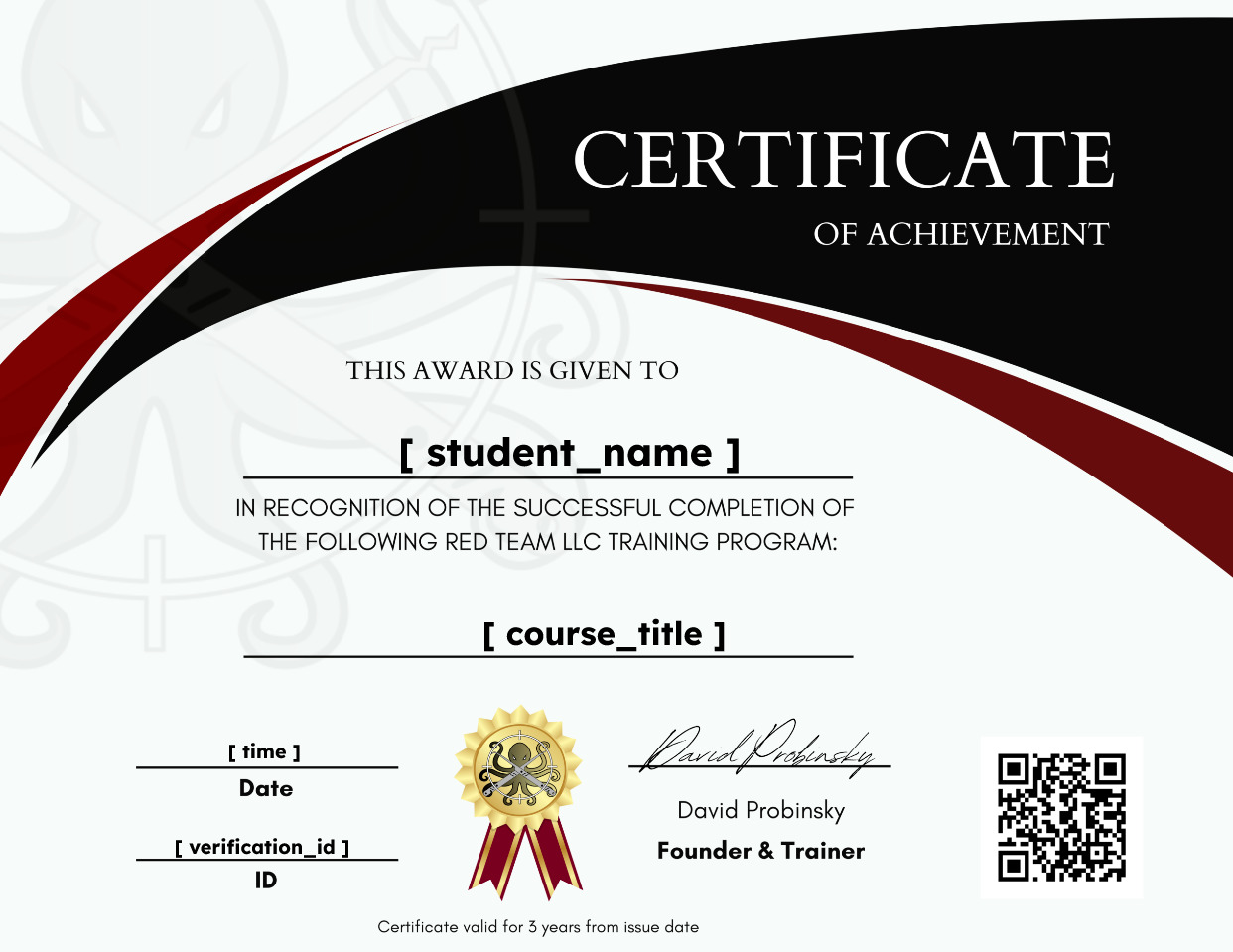
Earn a certificate
Add this certificate to your resume to highlight your skills and stand out.
Student Ratings & Reviews